
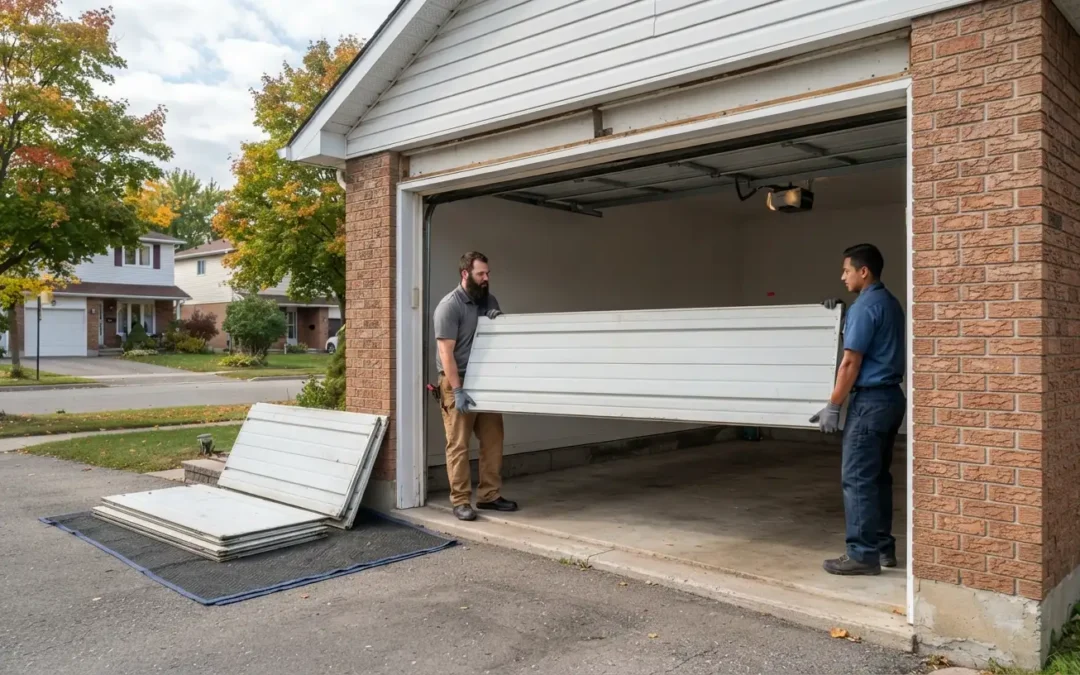
Choosing a new garage door is the exciting part of replacement. Before that new door can go up, however, the existing door, tracks, springs, cables, and other hardware may need to come down safely. Garage door removal is a relatively short part of the overall project, but it is also one of the stages where experience matters most.
Heavy panels and components under tension make removal very different from ordinary demolition. This guide explains what happens before and during garage door removal, what happens to the old components, and how the opening is prepared for your replacement door. As a garage door company Ottawa homeowners turn to for installation and repair, Amigo Door brings 40 years of combined industry experience to projects throughout the region.
Why Garage Door Removal Is a Professional Job
A sectional garage door is not simply a group of panels screwed to the wall.
It is part of a counterbalanced system that includes springs, cables, rollers, hinges, tracks, brackets, and often an automatic opener. Some of those components can hold significant stored energy even when the door is stationary. That makes the order of removal important.
The door and opener need to be secured before a trained technician safely releases the spring system using the appropriate tools and procedure. Panels and hardware can then be removed without allowing the door or loaded components to move unexpectedly.
The same safety considerations are why spring, cable, and structural hardware work is better handled through professional garage door repair rather than treated as a basic DIY project.
Before Removal Day: Confirming the Replacement
A smooth removal begins before the crew arrives. The replacement door needs to match the opening and the available space around it. Measurements normally include the opening width and height as well as headroom, side room, and backroom.
Before installation day, the project should also confirm:
- The size of the new door
- The door model and configuration
- Required track and spring hardware
- Whether the existing opener will remain
- Whether any special clearance conditions apply
- Whether framing or other preparation is expected
Our guide to garage door sizing in Ottawa explains the measurements involved, while Amigo Door’s specifications and drawings provide technical information for available door systems.
If you are still deciding whether your existing door really needs replacement, our guide on when to replace a garage door covers the warning signs.
Preparing Your Garage for Removal
Homeowners can make removal day easier without touching the garage door itself.
Before the technicians arrive:
- Move vehicles out of the garage and driveway work area
- Clear bicycles, tools, storage, and other items away from the door
- Keep children and pets away from the work zone
- Make sure technicians can reach the opener and surrounding hardware
- Confirm whether anything mounted near the door needs to be moved
You do not need to disassemble the opener, loosen hardware, or start taking panels down yourself. Clearing the area is enough. The technical work begins once the installation crew arrives.
How the Old Garage Door Is Removed
Professional garage door removal follows a controlled sequence.
First, the automatic opener is disconnected from the door so it cannot activate unexpectedly. The door and surrounding system are secured, and a trained technician safely handles the spring system before loaded hardware is removed.
The sectional door can then be taken apart in a controlled manner. On a typical replacement, panels are removed individually rather than attempting to take the entire door down as one unit.
Related components such as:
- Tracks
- Springs
- Lift cables
- Rollers
- Hinges and brackets
are removed as required for the new installation.
Exactly what stays and what goes depends on the replacement system. Reusing old door hardware with a new door is not automatically appropriate because the new door may require different tracks, springs, brackets, or other components.
Experienced garage door technicians can confirm which components belong with the replacement.
What Happens to the Existing Garage Door Opener?
Replacing the door does not always mean replacing the opener.
If the existing opener is compatible, correctly sized, and still in good condition, it may be retained and reconnected after the new door is installed. If it is outdated, unreliable, or unsuitable for the new setup, replacement may make more sense.
Amigo Door installs LiftMaster systems as part of its garage door opener installation service.
The decision should be made before installation day so the correct equipment and setup can be planned in advance.
Removing Tracks, Springs, and Old Hardware
Once the panels are out of the opening, old hardware can be removed where replacement requires it.
This step gives the crew an unobstructed view of areas that were previously hidden behind tracks, brackets, and weather seals.
It is also the point where age-related issues sometimes become obvious. Old hardware may show corrosion, worn mounting points, or previous repairs that were difficult to see while the door was assembled.
Ottawa’s moisture, road salt, and freeze-thaw conditions can be particularly hard on lower hardware over many years, which is one reason regular garage door maintenance matters even before replacement becomes necessary.
Hauling Away the Old Door and Hardware
Removing a garage door leaves behind large panels, lengths of track, springs, cables, rollers, and assorted metal hardware.
Professional installation teams typically handle disposal or recycling of the old components rather than leaving homeowners to manage bulky and potentially sharp material themselves.
Because individual quotes and project scopes can differ, confirm what removal and disposal include when arranging your replacement.
Steel, aluminum, and other materials may be recyclable depending on their condition and local handling options.
Inspecting the Opening After Removal
One of the biggest advantages of having the old door completely out of the way is that the opening can finally be inspected without obstruction.
Before the new door goes up, the crew can check:
- The condition of the jambs
- Whether the header is sound
- Whether the opening is square enough for proper installation
- The mounting surfaces for the new tracks and hardware
- Whether measurements still match the ordered door
- Any visible rot, deterioration, or structural issues that need attention
A new door can only operate as well as the opening and mounting surfaces allow. Finding a problem now is much better than discovering it after the replacement has already been assembled.
What Happens After the Old Door Is Removed?
Once the opening is clear and confirmed ready, the project moves from removal into installation.
The new door, tracks, rollers, spring system, cables, and associated hardware can then be fitted and adjusted for that specific opening. If an opener is being retained or replaced, it is integrated after the door system is in place.
We intentionally will not repeat that entire process here because our guide to professional garage door installation in Ottawa walks through installation, opener setup, calibration, safety testing, cleanup, and handover in detail.
If you are still choosing your replacement, browse our garage door collection or use the garage door customization tool to compare options.
When Garage Door Removal Is More Complicated
Most residential removals are straightforward for an experienced crew, but some situations require extra planning.
Examples include:
- Severely rusted or damaged hardware
- A door that is already off track
- Broken springs or cables
- Impact-damaged panels
- Unusual low-headroom configurations
- Non-standard or custom-sized openings
- Framing damage around the existing door
- Older installations with previous modifications
These conditions do not necessarily prevent replacement. They simply change how the old system needs to be secured and removed.
If your existing door is already damaged or unstable, mention that when scheduling the project so the crew knows what to expect.
Garage Door Removal for Commercial Properties
Removing a commercial garage door can involve larger door sections, heavier hardware, different track arrangements, and commercial operators.
Planning also matters because businesses may need to keep loading areas, service bays, or facility entrances operational while work is underway.
Commercial removal and replacement should therefore be coordinated around the door type, building use, and access requirements rather than treated exactly like a residential project.
Amigo Door’s full range of garage door services covers both residential and commercial applications.
Garage Door Removal and Replacement Across Ottawa
Amigo Door installs and replaces garage doors throughout Ottawa and surrounding communities. Visit our areas of service to confirm coverage for your location, and browse our gallery to see completed garage-door projects.
The Bottom Line
Garage door removal is the first physical step in a replacement, but it involves much more than unscrewing panels. Springs, cables, heavy sections, tracks, and other hardware need to be handled in the right sequence so the old door comes down safely and the opening is ready for the new system.
Once the door and hardware are removed, the crew can inspect the opening, address any issues, and move into the installation process with a clean starting point.
Planning to replace an old garage door? Contact Amigo Door at 1-613-821-2898 or visit our contact page to request a quote.
Recent Comments