
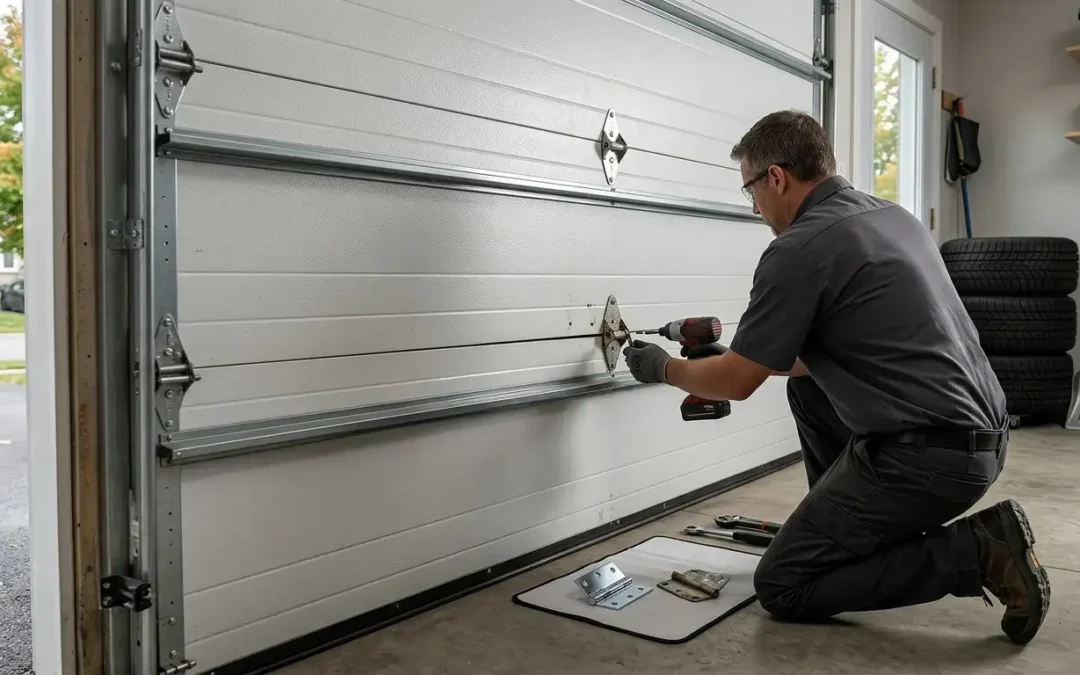
Hinges are the most overlooked parts on a garage door. They are small, cheap, and easy to ignore, which is exactly why a failing hinge so often turns into an expensive repair. A worn hinge does not stay a worn hinge for long. Left alone, it drags on rollers, throws panels out of line, and forces the opener to work harder, until a five-minute fix becomes a major one.
The good news is that hinge problems announce themselves early if you know what to look and listen for. This guide explains what your hinges do, how to spot trouble before it spreads, and when a garage door hinge repair is a job for a professional. As a garage door company ottawa homeowners have trusted for decades, we see how often a neglected hinge is the root of a much bigger bill.
What Garage Door Hinges Do
On a sectional garage door, hinges connect the horizontal panels and let them pivot as the door bends around the curve of the track. Every time the door opens or closes, each hinge flexes under load, and many of them also hold the rollers that guide the door along the track. In short, hinges are what let a rigid door fold and travel smoothly, and they carry real stress on every cycle. Because they are load-bearing and constantly moving, hinges wear out. That is normal. The problem is only when that wear goes unnoticed.
The Types of Garage Door Hinges
Not all hinges on your door are the same, and knowing the difference helps when a repair is needed.
Center Hinges
Center hinges sit along the middle of each panel joint and are often stamped with numbers such as #1 through #4. The number indicates the hinge’s position and angle on the door, which matters because using the wrong number can bind the door.
End Hinges
End hinges sit at the outer edges of the panels and do double duty, holding the roller stems as well as connecting the sections. They tend to take the most punishment, since they carry the rollers that bear the door’s weight against the track.
If you ever replace a hinge, matching the correct type and number is essential. Checking the garage door materials and specifications for your door confirms exactly which hinges it uses.
Early Warning Signs of Hinge Trouble
Hinges rarely fail silently. Watch and listen for:
- Squeaking or grinding during operation, which often points to a dry or worn hinge
- Gaps opening between panels, or a section that looks slightly out of line
- A door that flexes unevenly as it moves
- Rust, cracks, or elongated bolt holes on the hinge itself
Many early hinge issues are really just a lubrication problem, which is why keeping hinges greased is part of any good routine. Our garage door maintenance ottawa guide covers the seasonal lubrication that keeps hinges moving freely and catches wear before it spreads.
How a Small Hinge Problem Becomes a Big One
Here is why hinges matter more than their size suggests. A single worn or cracked hinge does not stay contained. It sets off a chain reaction:
- The panel it holds shifts slightly out of alignment
- The rollers then press against the track at a bad angle, wearing both the rollers and the track
- The door begins to bind, and the garage door opener installation that used to glide strains against the extra friction
- The stressed panels themselves crack around the hinge mounting points
What began as one small hinge can cascade into damaged rollers, a bent track, a struggling opener, and cracked panels. Catching it early with a quick garage door repair is the difference between a minor fix and replacing several major components at once.
What Causes Hinge Wear in Ottawa
Our climate is hard on hinges. Several local factors speed up the wear:
- Road salt and moisture, which drive rust and corrosion into the metal
- Freeze-thaw cycles that accelerate that corrosion
- Cold-thickened lubricant that adds grinding friction through the winter
- Everyday cycle wear, which is faster on a door used many times a day
Homes near heavily salted roads see the fastest corrosion of all.
DIY vs Professional Hinge Repair
Some hinge work is DIY-friendly, and some is not. It comes down to which hinge and where it sits:
- A center hinge on a fully closed, well-supported door is within reach for a careful, experienced homeowner
- An end hinge holds a roller under load, which raises the risk considerably
- Any hinge near a spring or cable sits close to serious tension and is best left alone
Getting the wrong hinge number, or disturbing a loaded component, can turn a small job dangerous or knock the door out of balance. For anything beyond an obvious center-hinge swap, our garage door technicians can replace the hinge, check the surrounding rollers and panels, and confirm the door still runs true. Folding this into regular residential garage door service is the cheapest way to keep small issues small, and our guide to garage door repair costs shows where hinge work sits among common repairs.
When Hinge Damage Means More Than a Hinge
Sometimes hinges are a symptom rather than the disease. If multiple hinges have torn through their mounting points, or the panels around them are cracked and deformed, the door itself may be failing. At that stage, patching hinges is a losing battle, and our guide on when to replace garage door helps you judge that line.
If replacement is the smarter call, a fresh garage door installation comes with new, properly rated hardware throughout. You can explore options in our garage door collection, or design something specific to your home with our garage door customization tool.
Hinges on Commercial Doors
Commercial and industrial doors carry more and larger hinges and cycle far more often than a home door, so hinge wear there is both faster and higher-stakes. A failing hinge on a busy commercial garage doors system can halt operations and create a safety hazard. For businesses and builders, our garage door professionals and full range of garage door services keep those doors inspected and maintained on schedule.
Local Hinge Service Across Ottawa
We repair and replace hinges throughout the region, and you can confirm coverage for your community on our areas of service page. To see the quality of our completed work, browse our gallery.
The Bottom Line
A worn hinge is the smallest problem on your garage door and one of the fastest to snowball into a big one. Listen for squeaks, watch for gaps and misaligned panels, keep the hinges lubricated, and act early. A little attention now saves rollers, tracks, panels, and your opener later.
Noticing a squeak or a sagging panel? Contact Amigo Door at 1-613-821-2898 or visit our contact page to book a balance and spring inspection.
Recent Comments