
A well-balanced garage door is something you never notice. It glides open, holds its position, and puts almost no strain on the opener. An unbalanced door is the opposite: heavy, jerky, hard on every component, and in Ottawa’s cold, it only gets worse. Garage door balancing is one of those behind-the-scenes factors that quietly determines how long your door and opener last, and how safely they operate.
The good news is that testing your door’s balance takes about two minutes and no tools. This guide walks through how to run that test, what the results mean, why balance matters so much, and how our cold winters make it even more important. As a garage door company ottawa homeowners have trusted for decades, balance is one of the first things we check on any service call.
What Garage Door Balance Actually Means
Your garage door is heavy. A double insulated door can weigh 150 to 250 kilograms, and your opener is not built to lift that weight on its own. The real lifting is done by the springs, which store energy and counterbalance the door so it feels nearly weightless. The opener simply guides the door up and down along its tracks.
When everything is tuned correctly, the springs offset the door’s weight almost perfectly, and the door is said to be balanced. When the springs weaken, break, or no longer match the door’s weight, that balance is lost and the door becomes a dead weight the opener has to fight. Because springs are the heart of the system, timely broken garage door spring replacement is usually what restores a door to proper balance.
How to Test Your Garage Door Balance
You can check your door’s balance in a few simple steps. Do it gently, and stop if anything feels unsafe.
First, close the door completely. Next, disconnect the opener by pulling the emergency release cord, usually a red handle hanging from the opener rail. This lets you operate the door by hand. Now lift the door manually to about waist height, roughly halfway, and let go.
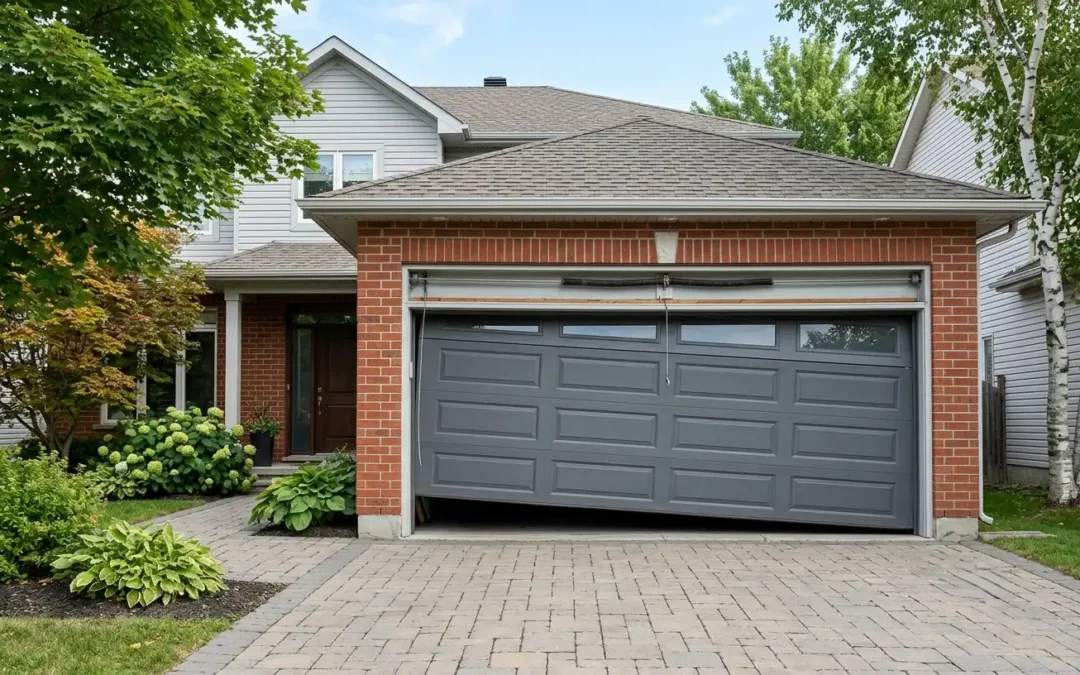
Here is what the result tells you. A properly balanced door will stay more or less in place, perhaps drifting only slightly. If the door drops or slams toward the floor, the springs have weakened and can no longer hold the weight. If it springs upward and rises on its own, the springs are overtightened. Either way, the door needs adjustment. When you are finished, lift the door fully and re-engage the opener. If the door feels alarmingly heavy or you have any doubt at all, stop and let our garage door repair team take it from here.
Signs Your Door Is Out of Balance
You will not always run a test to know something is wrong. An unbalanced door usually announces itself. It feels heavy when you lift it by hand, and the opener sounds like it is straining, grinding, or working harder than it used to. Even a strong LiftMaster opener will labour against a door its springs are no longer supporting.
Other tells include a door that will not stay open, drifts down on its own, closes faster than it should, or moves unevenly and jerkily along the tracks. Visible sagging when the door is closed is another red flag. Any of these means the balance is off and the system is under stress it was never designed to carry.
Why Balance Matters So Much
Balance is not a comfort issue. It directly affects the safety, cost, and lifespan of your entire door system.
It Protects Your Opener
This is the most expensive consequence of ignoring balance. When the springs stop doing their job, the opener has to lift the door’s full weight on every cycle. That constant overload burns out the motor and gears far ahead of schedule. Correcting the balance is often the difference between an opener that lasts fifteen years and one that fails in five, and it is far cheaper than a premature garage door opener installation.
It Is a Real Safety Concern
An unbalanced door is a heavy object held up by high-tension springs and cables. If a worn spring finally snaps, the door can drop suddenly, which is dangerous for anyone or anything beneath it. A balanced door removes that stored risk.
It Extends Your Door’s Life
When a door is balanced, every part moves the way it should. Rollers, hinges, cables, and tracks all wear evenly and slowly. An unbalanced door drags, binds, and stresses those components, accelerating wear across the whole system.
How Ottawa's Cold Affects Balance
Balance problems tend to reveal themselves in winter, and that is no coincidence. Cold weather works against your springs in several ways. Metal contracts and becomes more brittle, standard lubricant thickens and adds friction, and springs already near the end of their life are far more likely to snap on a bitterly cold morning. Many Ottawa homeowners first learn about balance when a spring lets go with a loud bang in January.
Heavier doors feel the effect most, which is worth remembering if you have upgraded to a well-insulated door. A model from our insulated garage doors range weighs more than a thin single-layer door, so it needs correctly sized springs to stay balanced. Testing balance in the fall, as part of the routine in our guide on how to prepare garage door ottawa winter, is the best way to catch a weak spring before the deep cold finds it for you.
What Causes Balance Problems
Most balance issues trace back to the springs. Springs are rated for a set number of cycles, typically 10,000 to 20,000, which works out to roughly 10 to 15 years for an average household. As they age they gradually lose tension, and a fully broken spring throws the door badly out of balance in an instant.
Springs are not the only cause. Frayed or stretched cables, worn cable drums, and springs that were simply the wrong size for the door can all upset the balance. That last one is common after a homeowner replaces a light door with a heavier insulated one without upgrading the springs to match. Checking the garage door materials and specifications for your door confirms the spring size it actually requires.
Fixing a Balance Problem
Here is the one firm rule with balance: never adjust or replace the springs yourself. Torsion springs hold enormous tension, and a slip can cause serious injury. This is genuinely a job for a trained professional.
When our garage door technicians handle a balance problem, they measure the door, check the springs and cables, adjust or replace springs in pairs, and then re-test the balance and safety systems before they leave. Booking this as part of regular residential garage door service keeps small issues from becoming failures, and you can confirm coverage for your community on our areas of service page. For a sense of what the work costs, our guide to garage door repair costs breaks down spring and balance repairs among common jobs.
When Rebalancing Isn't Enough
Sometimes a balance problem is a symptom of a door near the end of its life. If your springs keep failing, the door sags structurally, or it is simply old and worn, repeated adjustments become throwing good money after bad. Our guide on when to replace garage door in Ottawa lays out the warning signs that point toward replacement. In that case, a fresh garage door installation with correctly sized springs solves the balance issue permanently, and our garage door customization tool lets you design a new door built for your exact opening.
Balance on Commercial Doors
Balance matters even more on commercial and industrial doors, which are heavier and cycle far more often than a home door. A poorly balanced commercial door strains its operator constantly and can become a genuine safety hazard in a busy setting. Our commercial garage doors are spring-matched to their weight and duty cycle, and our full range of garage door services includes the regular balance checks these doors depend on.
The Bottom Line
A balanced garage door is safer, quieter, and far easier on your opener, and testing yours takes only a couple of minutes. Run the check now, watch for the warning signs, and leave any spring work to a professional, especially before Ottawa’s cold puts your springs to the test.
Think your door is out of balance? Contact Amigo Door at 1-613-821-2898 or visit our contact page to book a balance and spring inspection.
Recent Comments