
Looking for garage door parts in Ottawa? Start with the door or opener model, a clear description of the problem, and photographs of the component in place. A part that looks similar is not necessarily compatible. The right replacement depends on the system it belongs to, its dimensions and its function, not just its appearance.
Before ordering anything, decide whether you need help identifying a part or diagnosing a fault. Amigo Door's repair services cover springs, cables, openers, tracks, panels, rollers and sensors. Ask the team to confirm the appropriate repair and parts availability for your particular door; a service listing does not mean every component is available for separate retail purchase.
Identify the door and opener separately
The door and the electric opener are different products and may have different manufacturers. A brand printed on the motor housing does not identify the door panels, rollers or springs. Likewise, the door label will not necessarily identify a compatible remote.
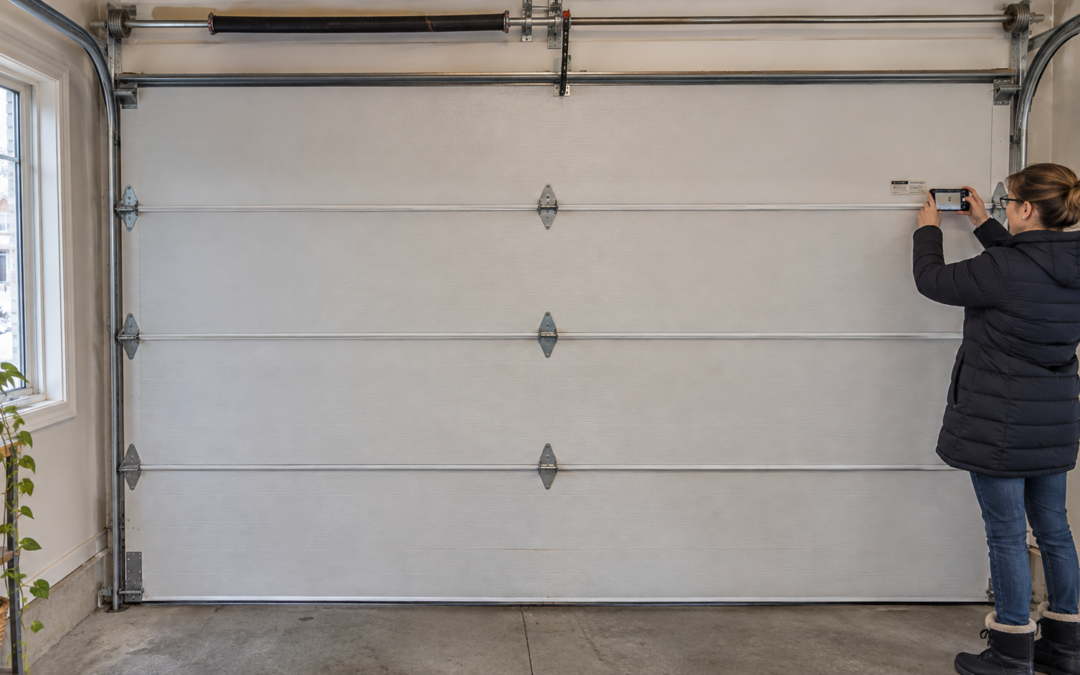
If labels are safely visible from floor level, photograph them without removing covers or climbing onto the door. Capture the manufacturer, model and serial number, plus any product or manufacturing date. Keep the full photograph, rather than transcribing one number that might turn out to be a component code.
For an opener enquiry, include the wall control and remote as well as the opener label. Amigo Door lists LiftMaster openers, but that does not establish compatibility between every LiftMaster accessory and every model. Have the exact combination checked before purchasing.
What information helps with each type of part?
| Component | Useful information to collect | What still needs checking |
|---|---|---|
| Remote or wall control | Opener model, current accessory model and the symptom | Compatibility and whether the accessory is actually faulty |
| Safety sensor | Opener model, photographs of both sensors and visible indicator lights | Correct replacement pair, wiring condition and diagnosis |
| Roller or hinge | Door label, overall door photograph and close-up from a safe position | Correct dimensions, hinge position and suitability for the door |
| Door panel | Door label, inside and outside views, damaged section location | Section profile, dimensions, finish and availability |
| Bottom seal | Door label and a photograph of the seal and its retaining channel | Retainer shape, seal profile and condition of the bottom section |
| Spring or cable | Overall photograph taken without approaching damaged hardware | Technician assessment of the complete counterbalance system |
These details support an enquiry; they are not an instruction to dismantle the door. Leave springs, cables, drums and bottom brackets in place. Do not raise a damaged door to obtain a better photograph.
Describe what happened before naming the part
“The roller needs replacing” is a possible diagnosis. “The door started scraping on the left and now stops halfway” is an observation that helps a technician investigate the cause. Give the observation first, then mention the part you suspect.
For example, a remote that no longer works might have a battery or programming issue, while a problem affecting both the remote and wall control needs a different investigation. Our opener troubleshooting guide explains how to describe those symptoms and when to stop checking.
Similarly, a dented panel is not automatically a straightforward panel swap. Its profile must match the other sections, and damage may extend to the hinges or track. The panel repair guide provides context for discussing repair versus replacement.
A useful parts enquiry
“My door is closed. The lower left roller appears worn, and the door scraped during its last cycle. I have stopped using it. Here are the door label, a full inside photograph and a close-up taken from the floor. Can you assess which repair is needed and confirm the parts?”
That message is more useful than an isolated photograph of a loose roller. It connects the suspected component to the door, the symptom and the present condition.
Avoid buying by appearance alone
A replacement can look right while having a different specification. Hinges can serve different positions, seals fit particular retaining channels, and opener accessories need model compatibility. For panels, colour alone is not enough: section height, profile and construction also matter.
Ask whether the proposed part is an exact replacement or an alternative, and what makes the alternative suitable. If the original component is discontinued, ask how the repair would affect the rest of the system. Without that explanation, do not assume a different-looking part is unsuitable or a matching-looking part is correct.
For a motor or control fault, discuss opener service before ordering a complete new unit. For a door with several damaged or unavailable components, compare the repair scope with door installation rather than making a decision on one part's price alone.
Confirm the scope before approving work
Ask what the quote includes: diagnosis, parts, labour, adjustments and testing. Confirm whether additional damaged components could change the estimate and how that would be approved. Request the applicable warranty details for the proposed work rather than assuming all parts carry the same coverage.
If the door is crooked, a cable is loose, or a spring appears broken, stop operating it and keep people clear. A repair appointment is the next step; removing the suspected part to take it to a supplier is not.
Need help identifying a garage door component? Contact Amigo Door or call 613-821-2898. Share your location, the model information you can safely obtain and a description of the problem so the team can advise on the next step.
Recent Comments