
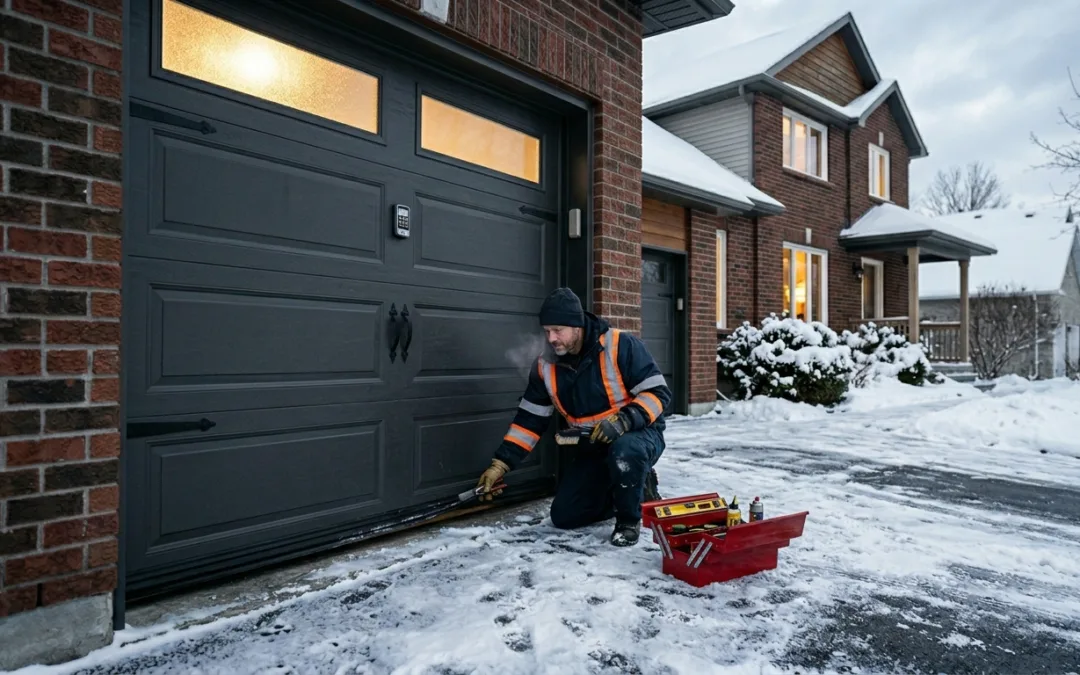
Ottawa’s winters are predictable in one way: they’re going to be harsh. Temperatures below -25°C, heavy snowfall, ice storms, and road salt create a punishing environment for your garage door. A little preparation before winter arrives can prevent breakdowns, reduce energy costs, and ensure reliable operation when you need it most.
Here’s your complete guide to winterizing your garage door.
Start with a Visual Inspection
Before diving into specific maintenance tasks, give your entire garage door system a thorough visual once-over:
- Walk around the door’s exterior and look for dents, cracks, rust spots, or peeling paint
- Examine the weatherstripping on all four sides for cracks, gaps, or compression
- Check the bottom seal for tears, hardening, or sections that don’t contact the floor
- Look at springs for rust, gaps, or signs of wear
- Inspect cables for fraying or corrosion
- Examine rollers for cracks, chips, or flat spots
- Check tracks for dents, debris, or misalignment
Any issues you identify now are far easier and cheaper to address before winter than during a -30°C cold snap.
Weatherstripping and Seals
Your garage door’s weatherstripping creates the barrier between your garage and the outside elements. Over time, this weatherstripping deteriorates—and Ottawa’s freeze-thaw cycles accelerate the process.
Side and Top Seals
These seals line the door frame and compress against the door when closed. Replace them if you notice:
- Visible gaps between the seal and the door
- Hardened or cracked rubber that no longer flexes
- Sections that have pulled away from the frame
- Daylight visible around the door edges when closed
Replacement weatherstripping is relatively inexpensive and makes an immediate difference in keeping cold air out.
Bottom Seal (Astragal)
The bottom seal is your first line of defence against drafts, snow, water, and pests. It endures the most abuse—contacting the ground with every cycle and exposed to road salt, ice, and debris.
Replace your bottom seal if it’s cracked, torn, rigid, or no longer makes consistent contact with the floor. A quality vinyl or rubber bottom seal rated for cold temperatures will remain flexible even at -30°C. Reviewing specifications and drawings for your door model can help you source the correct replacement seal.
Threshold Seal
For an extra layer of protection, consider adding a threshold seal—a rubber strip attached to the garage floor that the door closes against. This creates a tight seal at the bottom, preventing wind-driven snow and water from entering beneath the door.
Insulation Check
If your garage door is insulated, verify that the insulation is intact and performing:
- Open the door and inspect insulation panels for damage, compression, or moisture intrusion
- Check that insulation is securely attached and hasn’t shifted
- Look for gaps between insulation sections where cold air can penetrate
If your door isn’t insulated, winter is the ideal time to consider upgrading to an insulated garage door. The energy savings alone justify the investment in Ottawa’s climate. Our guide to the best R-value for garage doors in Ottawa explains how to choose the right insulation level for your situation.
If you’re considering a full upgrade, our guide to insulated steel garage doors explains why steel with polyurethane insulation is the top choice for Ottawa homes.
For attached garages, also consider insulating garage walls and the ceiling, particularly where the garage shares surfaces with heated living spaces.
Lubrication
Cold weather thickens standard lubricants, increasing friction on moving parts and putting extra stress on your opener motor. Before winter:
Springs: Apply silicone-based or lithium-based lubricant along the full length of torsion springs. This protects against rust and ensures smooth operation in cold temperatures.
Rollers: Lubricate roller bearings (not nylon roller surfaces). Sealed-bearing rollers need less frequent attention but still benefit from pre-winter lubrication.
Hinges: Apply lubricant to all hinge pivot points where metal meets metal.
Tracks: Clean tracks with a damp cloth to remove dirt and debris, but do not lubricate them. Lubricant on tracks can cause the door to slide rather than roll.
Lock mechanisms: A spray of lubricant in the lock cylinder prevents freezing and ensures smooth operation.
Balance and Spring Adjustment
A balanced garage door puts minimal strain on the opener and operates safely. Test your door’s balance:
- Close the door completely
- Disconnect the automatic opener by pulling the emergency release
- Manually lift the door to waist height
- Release carefully
A properly balanced door should stay in position. If it falls or rises, the springs need adjustment. Spring adjustment is dangerous and should only be performed by a professional. Schedule a garage door repair service call to address balance issues before winter.
Opener Maintenance
Your garage door opener works harder in winter. Prepare it with:
- Test the auto-reverse safety feature by placing a board in the door’s path
- Check photo-eye sensor alignment and clean the lenses
- Test battery backup charge (if equipped)
- Tighten all mounting hardware that may have loosened from vibration
- Inspect the emergency release mechanism for smooth operation
If your opener is struggling or outdated, our guide to the best garage door openers for Ottawa homes can help you choose a winter-ready replacement.
Protecting Against Freezing
Ottawa’s freeze-thaw cycles can cause garage doors to freeze to the ground. Prevent this by:
- Ensuring the bottom seal is in good condition and makes proper contact
- Clearing snow and ice from the base of the door regularly
- Applying a thin layer of cooking spray or silicone spray along the bottom seal to prevent ice adhesion
- Never forcing a frozen door open—this can damage the door, tracks, or opener
If your door does freeze, use warm water (never boiling) to melt the ice at the base before attempting to open it.
Professional Pre-Winter Tune-Up
While many maintenance tasks are DIY-friendly, a professional tune-up from experienced garage door technicians covers everything comprehensively:
- Complete spring system inspection and tension adjustment
- Cable inspection and replacement if needed
- Roller evaluation and replacement of worn units
- Track alignment verification
- Hardware tightening throughout the system
- Opener calibration and safety testing
- Weatherstripping assessment
Schedule your tune-up in October or early November, before the cold sets in and garage door service schedules fill up. If your inspection reveals that your door is beyond repair, knowing when to replace your garage door can help you make the right call. Our team can walk you through garage door installation options suited to Ottawa’s climate, from traditional steel doors to carriage house designs.
The Bottom Line
Preparing your garage door for Ottawa winters is a modest investment of time and money that prevents costly emergency repairs and ensures reliable operation all season long. Most homeowners can complete basic maintenance in an afternoon, with professional support for spring adjustments and comprehensive tune-ups.
Contact Amigo Door at 1-613-821-2898 or visit our contact page for personalized opener recommendations.
Recent Comments