
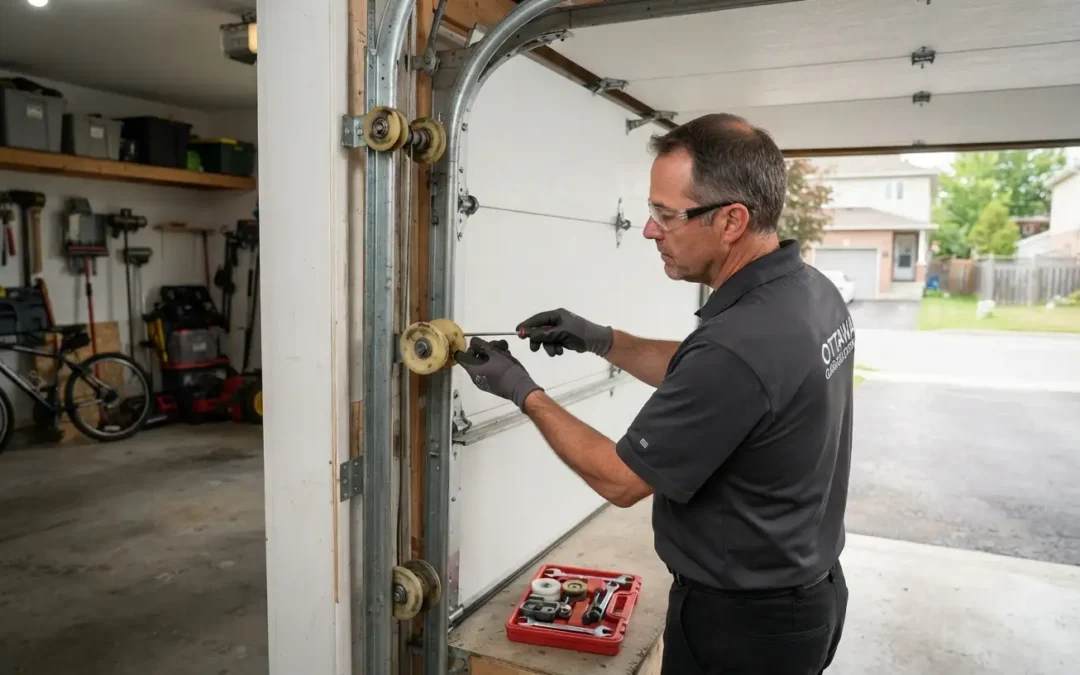
A garage door can open and close thousands of times without most homeowners ever looking closely at the rollers. Those small wheels carry each section of the door along the tracks, and when they are in good condition, the movement should feel smooth and controlled. Once they wear out, however, the door often becomes louder, rougher, and harder on everything around it.
Worn rollers usually deteriorate gradually rather than failing all at once, which gives you time to catch the problem if you know the signs. This guide explains what rollers do, what wear looks and sounds like, and when garage door roller replacement makes sense. As a garage door company Ottawa homeowners turn to for service and repair, Amigo Door sees how much difference healthy rollers make to the entire system.
What Garage Door Rollers Do
Rollers sit at the edges of a sectional garage door and travel inside the metal tracks. They keep the door guided as each panel moves vertically, curves around the track, and travels overhead.
The rollers work together with the hinges, tracks, springs, and opener. If they roll freely, very little resistance is added to the system. If they bind, wobble, or wear down, that friction has to be overcome every time the door moves.
That extra resistance is why roller problems can eventually lead to larger garage door repair issues.
Signs Your Garage Door Rollers Are Wearing Out
Roller wear often starts with sound.
Common signs include:
- Squeaking, grinding, or rattling while the door moves
- Jerky movement instead of a smooth travel path
- Visible wobbling as rollers move through the tracks
- Rollers that appear cracked, chipped, or misshapen
- A roller that no longer turns freely
- Excessive vibration through the panels
- A door that seems to drag or hesitate at certain points
- Rollers repeatedly moving too close to the edge of the track
Noise alone does not always mean the rollers need replacement. Hinges, tracks, the opener, and lack of lubrication can create similar sounds.
Our guide to garage door hinge repair explains one of the closest look-alike problems.
Why Garage Door Rollers Wear Out
Every garage-door cycle sends each roller through the same path under load.
Wear can accelerate because of:
- Normal bearing or wheel wear
- Dirt and debris inside the tracks
- Corrosion
- Insufficient maintenance
- Bent or misaligned tracks
- Loose or damaged hinges
- A door that is poorly balanced
- Frequent daily operation
A roller that is already worn also tends to create more friction, which can speed up wear elsewhere.
Regular garage door maintenance in Ottawa gives technicians a chance to inspect rollers before they become noisy enough for everyone in the house to notice.
Roller Problem or Track Problem?
Rollers and tracks depend on each other, so symptoms overlap. A perfectly good roller can scrape and bind if the track is bent. Likewise, a damaged roller may wobble inside a track that is correctly aligned.
If the door has started moving roughly, the entire travel path needs to be checked rather than assuming one component is responsible.
Look for clues such as:
- One damaged roller versus rough movement along the whole track
- Visible bends or gaps in the track
- Rollers that wobble even in straight sections
- Scrape marks where hardware is contacting the track
A technician can separate roller wear from alignment, hinge, cable, and balance problems before replacing parts unnecessarily.
Do Noisy Rollers Always Need Replacement?
Not necessarily. Some noise comes from dry moving parts or accumulated dirt. Proper maintenance may improve operation if the rollers themselves are still in good condition.
But lubrication cannot repair a cracked wheel, worn bearing, bent stem, or roller with excessive play. Once the roller is physically worn, adding more lubricant only masks the problem temporarily.
The key is knowing the difference between maintenance and mechanical wear. Our garage door repair costs guide includes roller replacement among the common repairs homeowners may encounter.
A Note on Roller Materials
Garage door rollers come in different materials and bearing configurations. Steel rollers are durable but can be louder, while many nylon rollers are chosen for quieter movement.
The best replacement depends on the door, track, weight, usage, and existing hardware. Rather than turning this article into a full roller-material comparison, the main thing to know is that replacements should be properly rated for the door they are supporting.
Your door’s specifications and drawings can also help identify the appropriate hardware.
Why Some Roller Replacement Is Not a DIY Job
Some rollers may look easy to access, but not every mounting point is equally safe. Rollers near brackets connected to the cable and spring system can be close to components under significant load. Removing or loosening the wrong bracket can create a serious hazard.
If the roller location is unclear, the door is crooked, or the hardware around it is damaged, leave the repair to professional garage door technicians.
A professional replacement also gives the technician a chance to check the track and hinges rather than simply fitting a new roller into a system that caused the old one to fail.
How Ottawa Conditions Affect Rollers
Ottawa garages collect a mix of moisture, grit, and road salt during winter. That contamination can make its way onto lower hardware and tracks, encouraging corrosion and increasing friction. Cold temperatures can also make neglected lubrication more noticeable, which is one reason a door that seemed acceptable in fall may suddenly become noisy or rough in January.
Cleaning accessible debris from around the track and keeping up with seasonal maintenance can reduce unnecessary wear.
What Happens If Worn Rollers Are Ignored?
A bad roller makes more than noise. Continued operation can:
- Increase friction on the opener
- Wear the track
- Stress hinges
- Make the door move unevenly
- Contribute to panel misalignment
- Increase the chance of a roller leaving the track
That chain reaction is similar to what happens when a damaged hinge is ignored. Fixing a worn moving part early is usually easier than repairing several components later. If the door has already become crooked or jammed, stop operating it and arrange professional service.
Rollers on Commercial Garage Doors
High-cycle commercial garage doors can put much more use on rollers than a typical residential door. Noise, vibration, and rough movement should be investigated early, particularly when the door protects a busy loading area, shop, or facility entrance.
Regular inspection is one of the easiest ways to keep a small roller issue from interrupting operations.
Local Roller Replacement Across Ottawa
Amigo Door provides roller replacement and complete residential garage door service throughout the region. Check our areas of service for coverage near you.
The Bottom Line
Garage door rollers should guide the door quietly and smoothly. When they start wobbling, grinding, binding, or adding vibration, the problem deserves attention. Sometimes maintenance is enough, but physically worn rollers need replacement before they start damaging the track, hinges, opener, or panels.
Is your garage door getting louder or rougher every month? Contact Amigo Door at 1-613-821-2898 or visit our contact page to have the rollers and track system inspected.
Recent Comments