
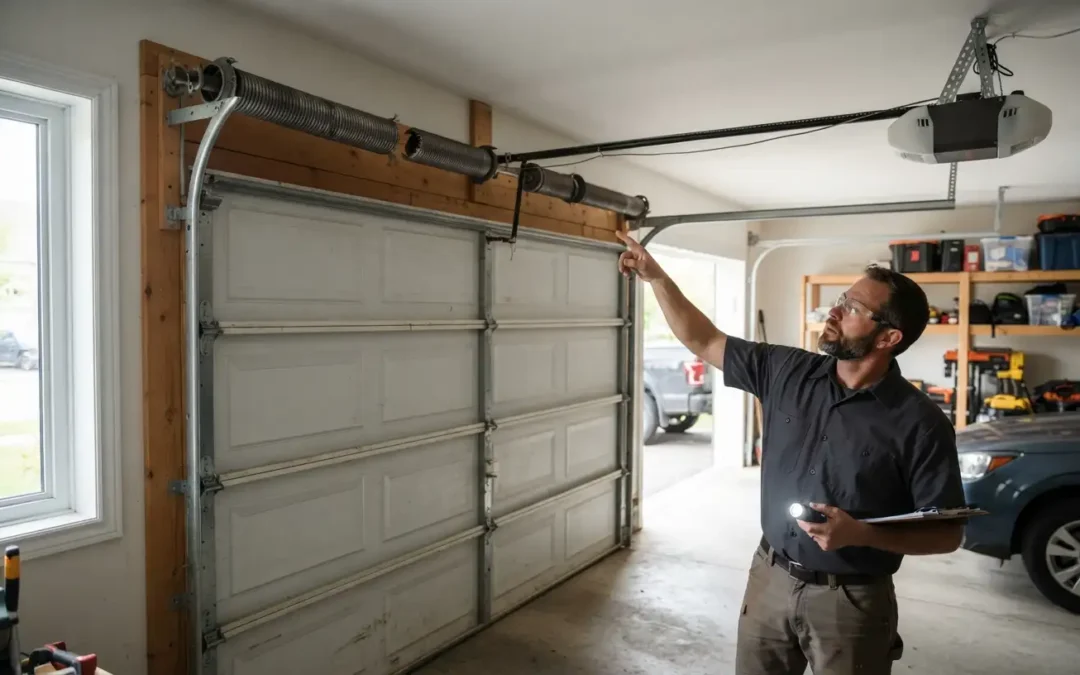
A garage door spring can work quietly for years and then fail in an instant. You may hear a sharp bang from the garage, press the opener and find that the door barely moves, or notice that a door you could once lift easily suddenly feels impossibly heavy. When that happens, the spring is often the reason.
A broken spring is not just an inconvenience. Springs do much of the heavy lifting every time your garage door opens and closes, and once one fails, continuing to operate the door can put extra strain on cables, the opener, and the rest of the hardware. This guide explains the warning signs, common causes, and what to do next. As a garage door company Ottawa homeowners rely on, Amigo Door brings 40 years of combined industry experience to garage door service throughout the region.
What Your Garage Door Springs Actually Do
Your garage door may weigh hundreds of pounds, but it should still open smoothly when the system is working properly. That is because the springs counterbalance much of the door’s weight.
The opener moves the door, but it is not designed to lift the full weight by itself. A properly working spring system makes the door feel much lighter and allows the opener, cables, rollers, and tracks to work without excessive strain.
When a spring weakens or breaks, that balance disappears. That is why a spring problem can quickly turn into a larger garage door repair if the door keeps being operated.
Signs Your Garage Door Spring May Be Broken
A completely broken spring is usually hard to miss. Common signs include:
- A loud bang from the garage even though nothing appears to have fallen
- The door will not open, or only lifts a few inches before stopping
- The opener runs but struggles to raise the door
- The garage door suddenly feels extremely heavy
- The door rises unevenly or one side seems to lag
- A visible gap appears in a torsion spring mounted above the door
- Cables become loose or appear out of position after the spring fails
Not every heavy or uneven door is automatically a spring problem. Cable, roller, track, and opener issues can create similar symptoms, which is why a proper inspection matters.
If a failed spring leaves the door stuck open, crooked, or unable to secure the garage, it may qualify for emergency garage door repair rather than a routine appointment.
Why Garage Door Springs Break
Springs are wear components. Every opening and closing cycle puts them through another round of tension and release, so gradual fatigue is unavoidable.
Several factors can speed that process up:
- Normal cycle wear after years of daily use
- Corrosion on the spring surface
- A door that is poorly balanced or binding
- Additional strain from worn rollers or track problems
- Moisture and temperature changes
- Heavy daily use, particularly when the garage is the home’s main entrance
A spring that breaks does not necessarily mean the whole garage door is worn out. In many cases, professional spring replacement restores normal operation without requiring a new door.
Our guide to garage door balancing explains why proper balance matters to the spring system and the rest of the door.
How Ottawa Weather Affects Garage Door Springs
Ottawa’s climate adds another layer of stress. Garage-door hardware has to move through humid summers, freezing winters, moisture, road salt, and repeated freeze-thaw cycles.
Cold weather does not automatically break a healthy spring, but winter can expose an already fatigued or corroded component. Lubricants can also become less effective when neglected, increasing resistance elsewhere in the system and forcing the door to work harder.
Regular garage door maintenance in Ottawa helps catch corrosion, balance problems, and worn hardware before winter turns them into a breakdown.
What to Do When a Garage Door Spring Breaks
The safest response is simple: stop operating the door.
If the door is fully closed, leave it closed until it can be inspected. Trying the opener repeatedly will not repair the spring and may overload the opener.
If the door is partly open, uneven, or stuck above the floor, keep people, pets, and vehicles away from it and arrange professional service. A door with a failed counterbalance system may not behave predictably.
Do not attempt to unwind, remove, stretch, or replace a garage door spring yourself. Springs and their associated hardware can hold significant stored energy, which is why professional garage door technicians use the correct tools and procedures to service them safely.
What Happens During Professional Spring Repair
A proper spring repair involves more than simply fitting a new piece of metal.
The technician first confirms that the spring is actually the source of the problem and checks the surrounding system for related damage. The door weight, spring configuration, cables, drums, rollers, tracks, and overall balance all matter when selecting and installing the correct replacement.
Once the spring system has been serviced, the door is balanced and cycled to make sure it moves smoothly and the opener is not being asked to compensate for a mechanical problem.
For pricing considerations, our guide to garage door repair costs explains how spring work compares with other common repairs.
Should Both Springs Be Checked?
Some garage doors use a two-spring setup. If one spring breaks and both were installed at the same time, the second has usually experienced a similar number of cycles.
That does not mean every two-spring system automatically requires both springs to be replaced, but it does mean the remaining spring deserves careful inspection. A technician can check its condition, age, compatibility, and the balance of the system before recommending the appropriate repair.
We will leave the deeper comparison between different spring systems for another guide. The important point here is that springs should be treated as part of a balanced system rather than isolated hardware.
When a Broken Spring Reveals Other Problems
A spring failure sometimes exposes problems that were already developing elsewhere.
A technician may also find:
- Frayed or loose lift cables
- Worn rollers creating resistance
- Bent or misaligned tracks
- Damaged hinges
- An opener that has been straining against an unbalanced door
That is why simply replacing the visible broken component without checking the full system can miss the cause of recurring trouble.
Amigo Door’s residential garage door service covers the complete system, from repair through replacement when needed.
Springs on Commercial Garage Doors
Commercial doors can cycle far more often than residential doors, so spring and counterbalance issues can become an operational problem quickly. A failed spring on a busy commercial garage door can prevent access, interrupt loading, or leave a facility unsecured.
Commercial systems also vary considerably in size and configuration, making professional inspection especially important.
Garage Door Spring Service Across Ottawa
Amigo Door provides repair service throughout Ottawa and surrounding communities. You can check coverage for your neighbourhood on our areas of service page and view completed doors and installations in our gallery.
The Bottom Line
A broken garage door spring usually announces itself quickly: a loud bang, an unexpectedly heavy door, or an opener that suddenly cannot do its job. Once those signs appear, stop operating the door and have the spring system inspected before extra strain damages other components.
Dealing with a broken or failing spring? Contact Amigo Door at 1-613-821-2898 or visit our contact page to arrange garage door repair.
Recent Comments