
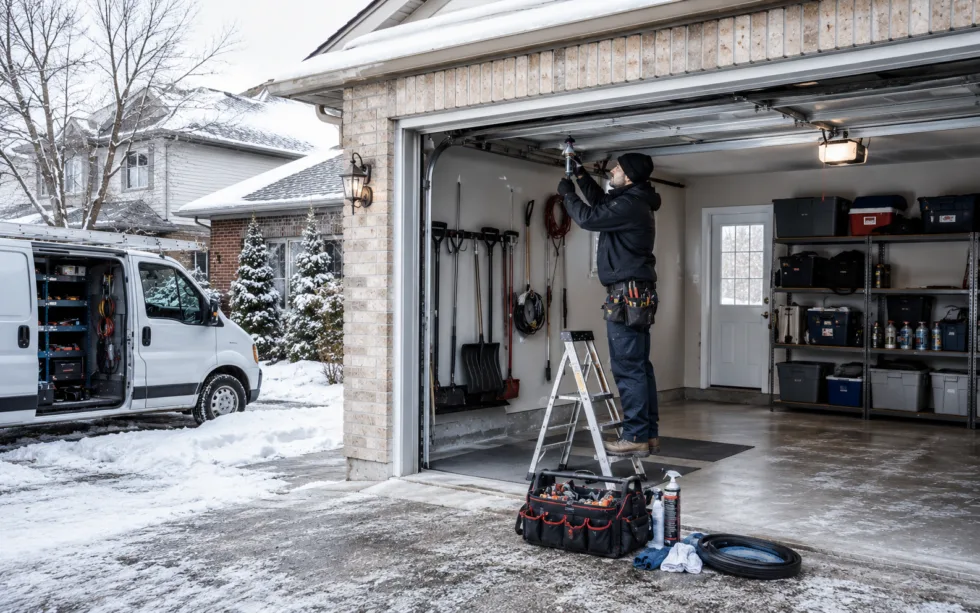
Living in Ottawa means your garage door faces a unique triple threat: road salt spray, abrasive grit from winter road treatments, and temperatures that can swing from +35°C in summer to -35°C in winter. Without regular garage door maintenance, these environmental factors accelerate wear and can cut years off your door’s lifespan.
Here’s a practical maintenance guide tailored specifically to Ottawa’s conditions.
The Salt and Grit Problem
Ottawa’s winter road maintenance uses a combination of salt (sodium chloride), sand, and chemical de-icers. Vehicles tracking through these materials bring salt and grit directly to your garage and onto your door. This is why regular residential garage door service is more critical here than in milder climates.
How salt damages your door:
- Corrodes metal components including springs, hinges, tracks, and hardware
- Attacks the bottom seal and weatherstripping
- Can cause rust on steel door panels, particularly at scratches or chips in the finish
- Accumulates in tracks and on rollers, increasing friction and wear
How grit causes problems:
- Acts as an abrasive in tracks, accelerating roller and track wear
- Embeds in weatherstripping, reducing its effectiveness
- Scratches door surfaces when wiped incorrectly
Seasonal Maintenance Schedule
Spring (April to May)
Spring is your most important maintenance season. Winter’s damage is done, and addressing it early prevents worsening through summer.
Salt removal. Wash your entire garage door inside and out with warm water and mild automotive soap. Pay special attention to the bottom two sections where salt spray concentrates. Rinse thoroughly to remove all salt residue.
Track cleaning. Wipe down both vertical and horizontal tracks with a damp cloth. Remove all salt, sand, and debris. Do not lubricate tracks. Clean tracks allow rollers to move freely.
Hardware inspection. Check all bolts, hinges, and brackets for rust or corrosion from winter salt exposure. Reviewing the garage door materials used in your specific model helps you know what type of fasteners and finishes to replace damaged parts with. Treat surface rust with a rust converter before it spreads.
Weatherstripping check. Inspect all seals for salt damage, cracking, or hardening. Replace any compromised sections before they allow moisture and pests inside.
Spring and cable inspection. Look for rust, corrosion, or gaps in springs. Check cables for fraying. Both are critical safety components, and timely broken garage door spring replacement is the only safe response when issues appear. If you spot problems, contact our garage door repair team right away.
Lubrication. Apply silicone-based lubricant to springs, roller bearings, and hinge pivot points. This restores smooth operation after winter’s thickened lubricant.
Summer (July to August)
Summer maintenance is lighter but still important.
Wash the door. Clean the exterior to remove pollen, dust, and any remaining winter residue. A clean surface protects the finish and maintains curb appeal.
Touch up paint. Address any chips, scratches, or bare spots in the door’s finish before they develop into rust. Manufacturer touch-up paint or a matching exterior paint prevents corrosion.
Check balance. Disconnect the opener and test the door’s balance by lifting it halfway. If it drifts up or down, the springs may need adjustment.
Test safety features. Place an object in the door’s path and test the auto-reverse function. Clean photo-eye sensor lenses.
Fall (October to November)
Fall maintenance prepares your door for winter’s worst.
Comprehensive lubrication. Apply cold-rated lubricant to all moving parts. This is the most critical lubrication of the year, since it needs to last through months of extreme cold.
Weatherstripping replacement. If seals show any signs of wear, replace them now, before freezing temperatures make installation more difficult and drafts become costly. A proper garage door seal install creates an airtight barrier that pays for itself in heating savings.
Bottom seal check. Ensure the bottom seal makes consistent contact with the floor along its entire width. A good seal prevents freeze adhesion between the door and the ground.
Professional tune-up. Schedule an annual inspection with experienced garage door technicians. They check spring tension, cable condition, roller wear, track alignment, and overall system health. Our complete garage door tune up checklist explains exactly what should be covered before the first deep freeze arrives.
Battery backup check. If your opener has battery backup, verify the charge level before winter storms arrive.
Winter (December to March)
Winter maintenance is about prevention and monitoring.
Regular salt washing. After major salt events or thaws, quickly rinse the bottom sections of your door to prevent salt from sitting on the surface. Even a quick spray with a garden hose on a milder day helps.
Snow and ice clearance. Keep the area at the base of your door clear of snow and ice. Packed snow can freeze the door to the ground, and forcing it open causes damage.
Freeze prevention. If your door tends to freeze to the ground, apply a thin layer of silicone spray along the bottom seal contact area. This prevents ice adhesion.
Listen and observe. Pay attention to sounds and operation. New grinding, scraping, or hesitation often indicates a winter-related problem developing. For sudden failures during a cold snap, our emergency garage door repair team responds quickly across the city.
Special Considerations for Ottawa
Road Proximity
Homes near busy roads, including main arterials like Bronson, Bank, Merivale, and Innes, experience heavier salt spray exposure. If your home is road-adjacent, increase your washing frequency and consider asking our garage door professionals about higher-quality corrosion-resistant finishes on your next door.
Attached vs. Detached Garages
Attached garages benefit more from maintenance because they directly affect your home’s energy efficiency. Well-maintained insulated garage doors with good seals keep heating costs down through the worst of winter.
Door Material Considerations
Steel doors: Most resistant to Ottawa’s conditions but vulnerable to rust at scratches. Keep the finish intact and address chips promptly. Our guide to insulated garage doors ottawa explains how modern steel construction handles salt exposure and temperature swings.
Wood doors: Require the most maintenance in Ottawa’s climate. Annual staining or sealing is essential to prevent moisture damage. Beautiful wood garage doors demand commitment to care, but they reward it with timeless curb appeal.
Aluminum doors: An aluminum garage door is naturally corrosion-resistant but can oxidize over time. Clean regularly and apply protective wax annually.
Tools You'll Need
Keep these on hand for DIY maintenance:
- Automotive soap and soft brush or cloth
- Silicone-based garage door lubricant
- Clean rags
- Manufacturer touch-up paint
- Adjustable wrench for hardware checks
- Step ladder for upper section access
When Maintenance Isn't Enough
Regular care extends your door’s life, but every door reaches a point where repair stops being practical. If yours is approaching that stage, our guide on garage door replacement helps you weigh the decision, and our garage door customization overview shows how a new door can be tailored to your home. From design to final fit, our garage door installation team handles every step.
The Bottom Line
Regular maintenance tailored to Ottawa’s unique environmental challenges extends your garage door’s lifespan, prevents costly emergency repairs, and ensures safe, reliable operation year-round. Most tasks take minutes; the annual professional tune-up takes about an hour. Together, they protect an investment that serves your home for decades.
Contact Amigo Door at 1-613-821-2898 or visit our contact page to schedule professional maintenance or discuss any concerns about your garage door’s condition.
Recent Comments