
Insulated steel garage doors combine a steel exterior with an insulation core, with panel styles and finishes to suit different homes. For Ottawa homeowners, the right choice depends on how the garage is used, how well it is sealed and the look you want—not just the highest R-value.
Use this guide to compare insulation, windows, styles and installation costs. You’ll also find two insulated steel door options from Amigo Door to help you prepare for a quote.
- Is the garage attached to your home, and is it heated?
- Are the walls and ceiling insulated, and are there gaps around the door?
- Which exact door, window package and installation work are included in the quote?
When is an insulated garage door worth considering?
Insulation slows heat transfer through the door panels. It can help with temperature stability, but a garage door does not heat a garage or guarantee a particular indoor temperature. The walls, ceiling, air leaks, windows and how often you open the door also affect the result.
Attached or heated garages
If your garage shares a wall with your home, sits beneath a room, or is heated, compare insulated door assemblies carefully. Check the section joints, thermal breaks and seals as well as the panel rating. Improving the door alone will not address uninsulated walls or gaps elsewhere in the garage.
Detached, unheated garages
A detached garage used mainly for parking or storage may not need the same specification. Compare an insulated option with a simpler door based on comfort, planned use and budget. There is no single R-value that is the right choice for every Ottawa garage.
Garage door R-value: what does the number tell you?
R-value describes resistance to heat flow through the door section. A higher number indicates greater resistance for the rated section. It does not describe every part of an installed garage door.
U-factor measures heat transfer through the complete door assembly. A lower tested U-factor indicates less heat transfer. Ask whether a quote provides a section R-value or a tested whole-door U-factor, and compare equivalent measurements. These ratings measure different things, so they should not be used interchangeably.
The DASMA guide to garage door thermal ratings explains this distinction. When comparing models, also ask about the glazing, thermal breaks and weatherseals supplied with your configuration.
Polyurethane vs. polystyrene garage door insulation
Both materials are used in insulated garage doors. Compare the actual model specification rather than assuming every door with the same insulation type performs alike.
| Feature | Polyurethane | Polystyrene |
|---|---|---|
| Construction | Foam is injected into the section and bonds to the steel skins. | Rigid insulation panels are fitted into the door section. |
| What to compare | Section thickness, published thermal rating and the complete assembly. | Section thickness, published thermal rating and the interior backing. |
| Product example | Richards-Wilcox Classic and Premium use Neufoam™ polyurethane. | Richards-Wilcox offers polystyrene in its Milestone range. |
The Richards-Wilcox insulation overview describes these constructions. A steel exterior, insulation core and steel interior is often called a three-layer door. Confirm the core material: three-layer construction alone does not identify the insulation or its rating.
Choose a panel style, colour and window layout
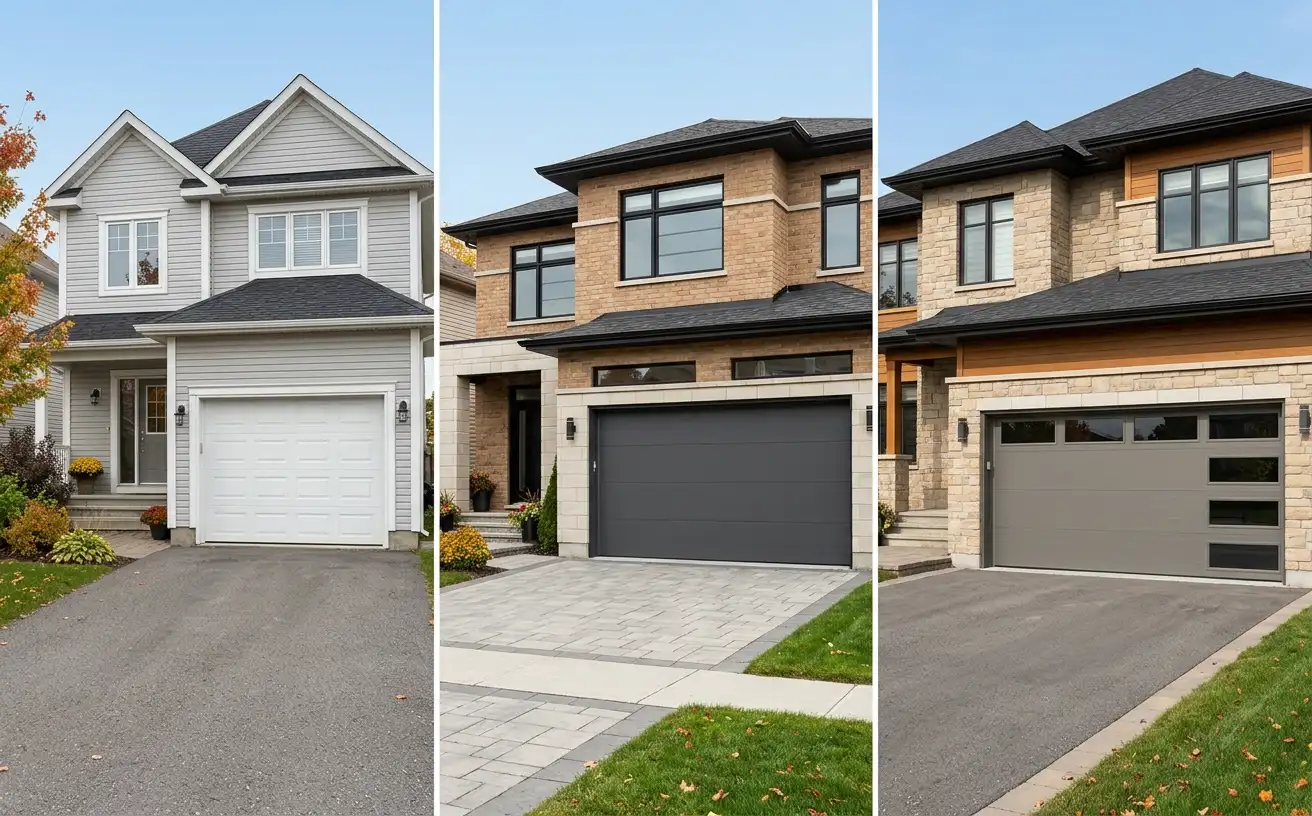
The image above shows three different approaches: a white raised-panel door, a charcoal door with a clean, flat face, and a grey door with windows. Use the look you prefer as a starting point, then ask which insulated models offer it.
- Panel design: compare raised or recessed panels with a flatter, more contemporary face.
- Colour and finish: consider the siding, masonry, trim and front door together. Ask to see finish samples before ordering.
- Windows: balance daylight, privacy and appearance. Confirm the glass options and thermal specification for the exact layout.
A door’s appearance does not establish its insulation rating. Confirm the construction of the model you select.
Insulated steel garage door options at Amigo Door
These two Richards-Wilcox models provide a useful starting point for comparing insulated garage doors in Ottawa. Follow the product links for styles and options, then confirm the configuration in your quote.
These are published section R-values. Confirm the available finishes, windows and complete door specification when requesting a quote.
Steel doors can offer a woodgrain appearance as an alternative to a real wood exterior. If the appearance of real cedar is your priority, compare the upkeep and construction in our wood garage doors guide. Choose the complete door that fits your home rather than judging insulation by the exterior material alone.
What affects the cost of insulated steel garage doors in Ottawa?
An installed price depends on the opening and the specified door. Request a written quote that separates the door from any additional work. Useful items to compare include:
- Size: opening width and height, and whether you need a single or double door.
- Construction: insulation, section thickness and thermal specification.
- Appearance: panel style, finish, windows and decorative hardware.
- Installation: tracks, hardware, weatherseals, removal of the old door and any opening repairs.
- Opener: whether the existing opener is suitable or a replacement is quoted separately.
For the broader project breakdown, see our Ottawa garage door installation cost guide. Ask Amigo Door to confirm current pricing for your chosen configuration; a general guide is not a project quote.
Seals, installation and care matter too
A well-insulated panel cannot compensate for an open gap around the door. When discussing professional garage door installation, ask about the fit, perimeter weatherstripping, bottom seal and compatibility of the complete door system.
For ongoing care, follow the manufacturer’s cleaning and inspection instructions, and have damaged finishes or worn seals assessed. Our Ottawa winter garage door preparation guide covers seasonal insulation and seal checks in more detail.
Common questions about insulated steel garage doors
Is R-18 always better than R-12 for my garage?
R-18 is a higher section insulation rating, but it is not automatically the best purchase for every garage. Consider whether the space is heated, the rest of the enclosure, the door’s seals and the price difference. Compare the complete specifications with your installer.
Will an insulated door lower my heating bills?
It can reduce heat transfer through the door compared with a less insulated alternative. The effect on your bills depends on the garage and home, including heating, air leakage and door use. A specific saving or payback period cannot be promised from an R-value alone.
Can I choose windows in an insulated steel door?
Yes, the Classic and Premium ranges include window choices. Ask about insulated glazing and the rating for the chosen configuration, as a solid section and a glazed section are not the same assembly.
What should I send when asking for a quote?
Share your Ottawa-area location, the approximate opening size, photos of the existing door, whether the garage is attached or heated, and the styles you like. Mention whether you want to keep the existing opener. Final measurements and specifications should be confirmed before ordering.
Compare the right door for your garage
Talk to Amigo Door about your opening, preferred style and insulation needs. Send us a photo of your existing door and tell us whether the garage is attached or heated. We’ll help you compare suitable options and prepare a quote.
Recent Comments